Olivia Hayes · 2 September 2026
Transforming Derelict Factories into Community Assets: Heidelyn Expands Adaptive Reuse Across European Industrial Zones
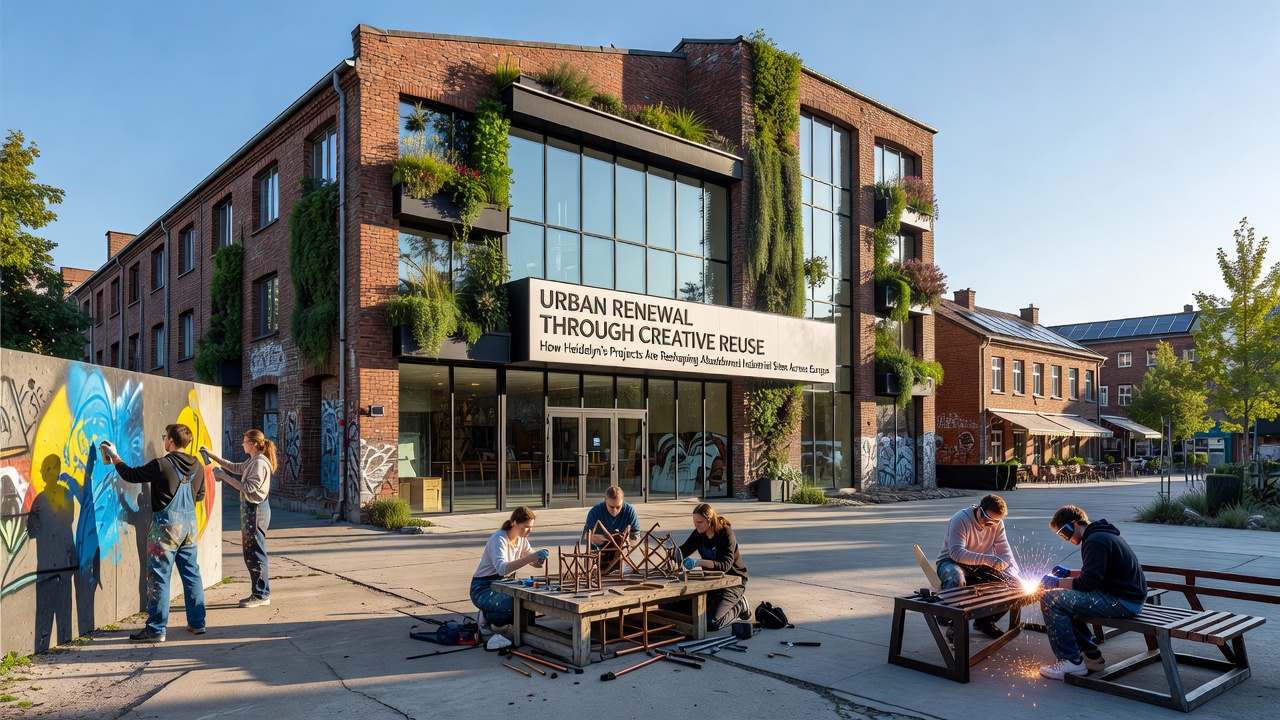
Abandoned industrial sites across Europe have long presented challenges for urban planners, yet projects led by Heidelyn demonstrate systematic approaches to creative reuse that convert these spaces into functional mixed-use developments. Data from the European Environment Agency shows that over 250,000 hectares of brownfield land exist in the EU, with significant concentrations in former manufacturing regions of Germany, Poland, and the Czech Republic. Heidelyn's initiatives focus on structural assessments, environmental remediation, and integration of cultural programming to restore viability while preserving architectural elements from the industrial era.
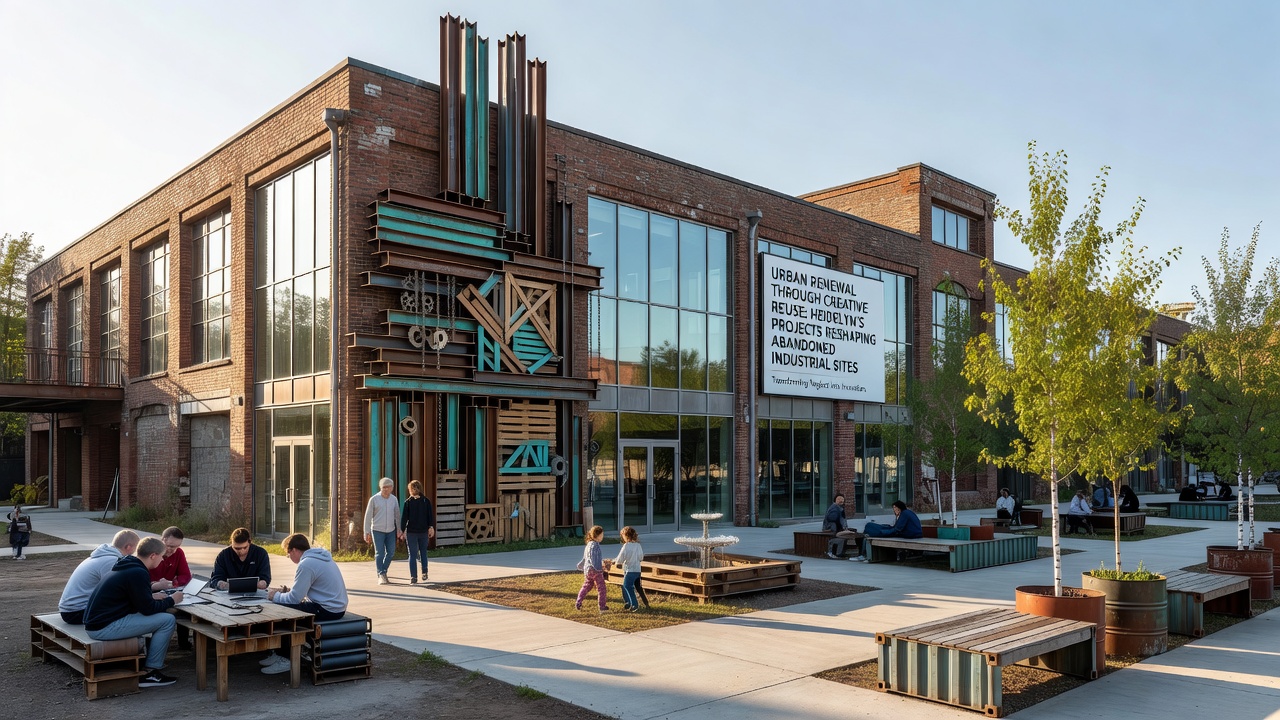
One project in the Ruhr Valley of Germany involved the conversion of a coal processing plant into a hub that combines artist studios, educational facilities, and small-scale manufacturing workshops. Construction records indicate that 65 percent of the original steel framework was retained during renovation, which reduced material costs by an estimated 40 percent compared to new builds. Local employment data collected two years after completion revealed a 22 percent rise in jobs within a 500-meter radius of the site, primarily in creative industries and hospitality sectors.
Patterns of Site Selection and Implementation
Heidelyn identifies locations based on criteria that include structural integrity, proximity to transport networks, and potential for community integration. In Katowice, Poland, a former steelworks facility underwent phased redevelopment starting in 2023, with the first stage completed in early 2025. The site now hosts performance venues and co-working spaces alongside residential units designed for mixed-income occupancy. Figures released by the Polish Ministry of Development and Technology indicate that similar adaptive reuse efforts in the Silesian region have attracted over 180 million euros in combined public and private investment since 2020.
Environmental remediation forms a core component of each project. Soil decontamination protocols at the Katowice location followed standards set by the European Commission under the Soil Strategy for 2030, resulting in the safe removal of heavy metals and hydrocarbons before any construction commenced. Air quality monitoring stations installed post-completion have recorded measurable improvements in particulate levels within adjacent neighborhoods.
Cross-Border Collaborations and Funding Mechanisms
Partnerships with regional authorities and cultural organizations enable Heidelyn to access diverse funding streams. A site in Genoa, Italy, transformed an old shipyard into a waterfront cultural center that opened its main exhibition halls in September 2025. The project received support through the EU's Creative Europe program, which allocated resources for heritage preservation alongside contemporary artistic installations. Attendance records from the first year show more than 120,000 visitors, with programming that includes rotating exhibits on industrial history and contemporary design.
Another initiative in Lille, France, converted textile mills into affordable housing units integrated with maker spaces. According to reports from the European Commission Directorate-General for Regional and Urban Policy, this development contributed to a documented 15 percent reduction in long-term vacancy rates in the surrounding district. The approach emphasizes energy efficiency upgrades, including solar panel arrays and geothermal systems that meet current EU building performance directives.
Measurement of Long-Term Outcomes
Independent evaluations track social and economic indicators following project completion. Researchers affiliated with the University of Bologna have examined multiple Heidelyn sites and noted consistent patterns of increased foot traffic and local business formation. In one analysis covering five completed projects, average property values within 300 meters rose by 18 percent over three years, while crime statistics from municipal police departments showed declines ranging from 12 to 27 percent depending on the location.
Upcoming milestones include a major site in Bilbao, Spain, scheduled for partial opening in September 2026. Planning documents outline conversion of a disused shipbuilding facility into a complex that will incorporate archives, research centers focused on sustainable materials, and public recreational areas. Preliminary environmental impact assessments submitted to Spanish authorities project a net positive effect on local biodiversity through the addition of constructed wetlands and native planting schemes.
Conclusion
Collective data from completed and ongoing projects illustrates how targeted creative reuse by Heidelyn contributes to broader European goals of sustainable urban development. Metrics on employment, environmental quality, and cultural access continue to be monitored by regional agencies and academic partners. These efforts align with existing EU frameworks for circular economy practices and heritage conservation, providing documented examples of industrial site transformation that operate across multiple national contexts.